


- Home
- Responsible Procurement (CSR)
- Carbon Footprint
Carbon Footprint Consultant: Measure, Understand, and Reduce Your Carbon Footprint
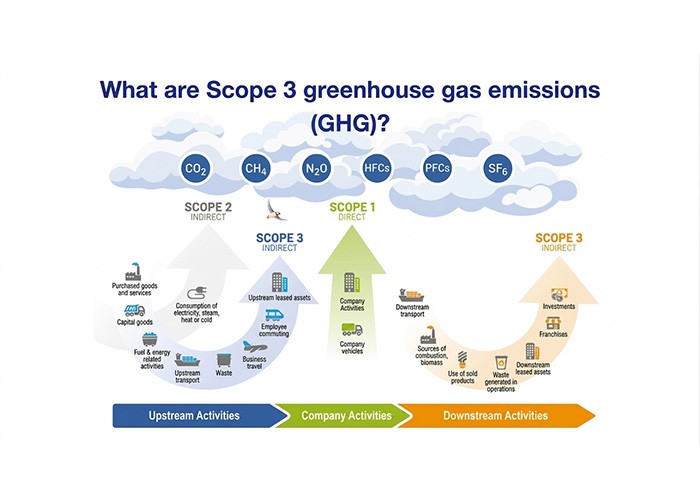
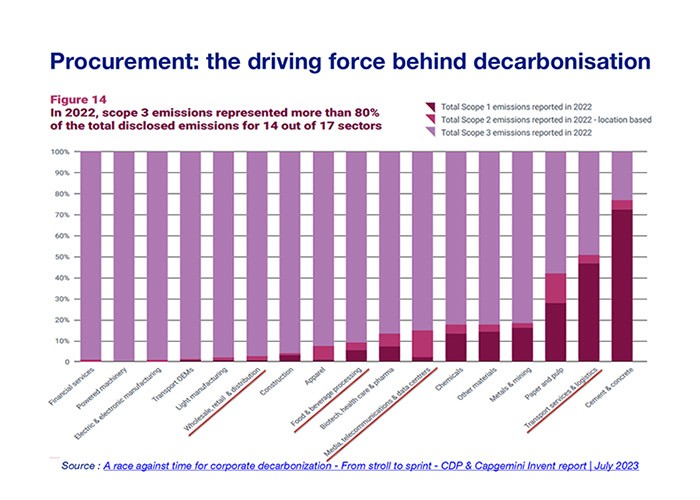
The Bilan Carbone® is a key tool for assessing the environmental impact of your purchases. Scope 3 accounts for the cumulative carbon footprint of your entire supply chain. It includes the GHG (greenhouse gas, including CO₂) emissions from your suppliers. As a result, with the exception of primary production sectors, most companies have a Scope 3 share exceeding 50%.
That’s why the most powerful levers lie with Procurement! This is particularly true for carbon and energy-intensive items, where procurement decisions have a direct impact on energy consumption and the company’s overall footprint.
It’s essential to challenge and engage all supply chain stakeholders, including suppliers.
We help you:
-
Measure your carbon footprint and break it down into Scope 1, 2, and 3.
-
Challenge and engage your suppliers to reduce the environmental impact of their products and services.
-
Incorporate carbon reduction criteria into your requests for proposals and selection processes.
-
Prioritize actions to reduce your environmental impact while optimizing your costs.
The Bilan Carbone® provides a snapshot of your carbon footprint at a given point in time and offers a concrete action plan to reduce it. When used wisely, this assessment can serve as the foundation for launching a more sustainable and resilient procurement strategy in terms of environmental impact.
Incorporating the carbon criterion into the 360° Procurement Dashboard allows you to track performance progress and update the Bilan Carbone® at the next review date. It is also a way to generate reliable data to support corporate communications.
GHG Protocol, BEGES and Bilan Carbone®: What are the Differences?
Bilan Carbone® methodology supporting BEGES & GHG Protocol formats
The Greenhouse Gas Emissions Report (BEGES) is defined by Article L.229-25 of the French Environmental Code. It applies differently to private companies and public entities.
-
For private companies, the requirement to publish a BEGES applies to organizations with more than 500 employees in mainland France and more than 250 employees in overseas territories. In both cases, the report must be published every four years.
-
For public entities, the requirement applies to local governments with more than 50,000 residents, as well as public institutions and legal entities governed by public law with more than 250 employees. In these cases, the report must be published every three years.
The GHG Protocol (or GreenHouse Gas Protocol) is a set of international standards, tools and guidelines for the accounting and reporting of greenhouse gas emissions by companies and other organisations. It is the most widely used global standard by companies for reporting their greenhouse gas emissions.
The Bilan Carbone® methodology allowing to present the results under both formats or BEGES, or GHG Protocol.
Bilan Carbone® v9.2: Just One of Many Methods, but in Fact, an Essential One!
Bilan Carbone® is not a legal requirement, but it is the most comprehensive method for a detailed analysis.
-
It accounts for 100% of Scope 3 emissions,
-
It serves as the first step in a climate strategy,
-
It facilitates communication with clients, investors, and industry-specific certification bodies.
Unlike the BEGES and GHG Protocol, it is not limited to regulatory requirements: it aims to provide an operational understanding of emissions and to define a credible actions plan, to enter in a progress scheme. That's one of the main evolution of the last v9 of the method.


Other Frameworks to Be Aware Of
Today, companies use several complementary frameworks depending on their needs:
-
ISO 14064: a standard ensuring the accuracy, transparency, and traceability of emissions calculations.
-
GHG Protocol: a global framework used to categorize emissions into Scopes 1, 2, and 3 and produce internationally comparable reports.
-
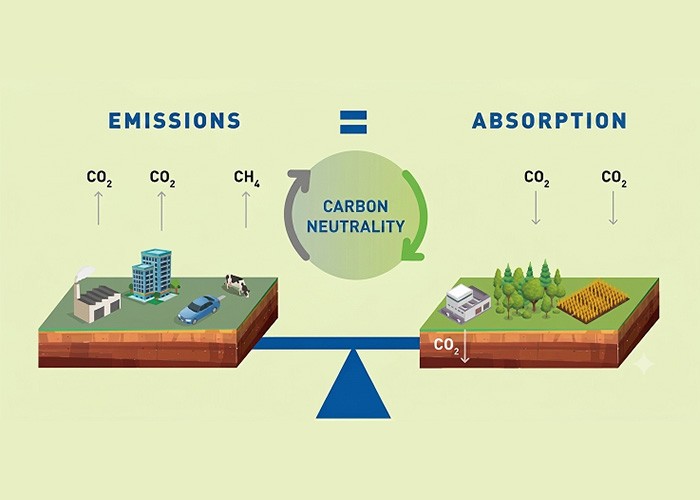
Net Zero Initiative (NZI): A framework that structures climate action around three levers: reducing one’s own emissions, reducing others’ emissions, and increasing carbon sinks.
-
Science-Based Targets initiative (SBTi): a framework for defining and validating targets aligned with the 1.5°C goal. Applicable primarily to voluntary companies, mainly large or international ones.
Compliance with these frameworks is not mandatory, but it adds credibility to your decarbonization efforts.